

The Mall Balloon Debate 2026
19th January 26
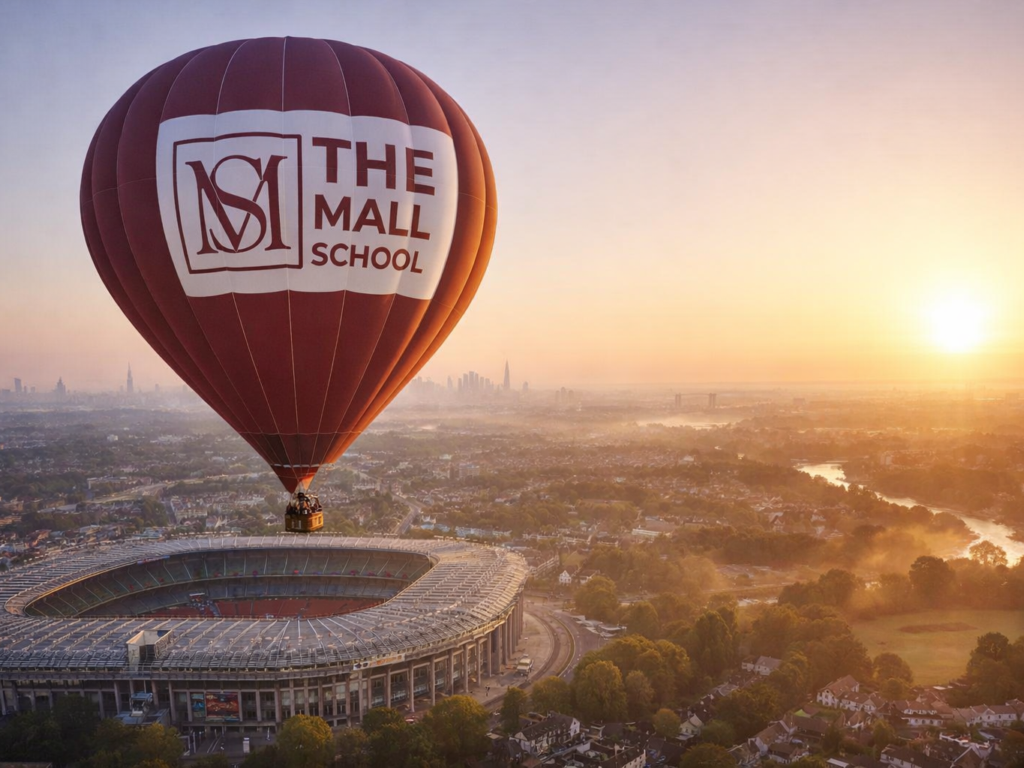
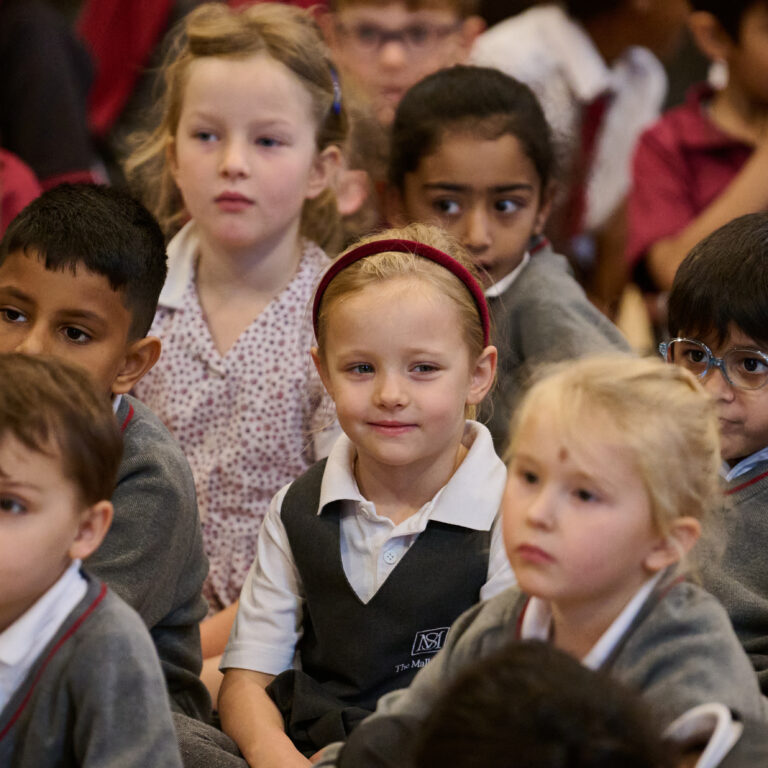
Every Spring Term, the school’s assembly series takes on a new guise: a balloon debate. The hot air balloon carries 8 influential people, either historical or current, where pupils learn and understand the importance of their legacy. Supported by Year 6, pupils from the school’s debate club help introduce a new figure each week, discussing the pros and cons of the individual’s lifetime work. Losing altitude, children from reception class upwards eventually vote to see who needs to leave the balloon to allow it to climb once again.
The skills the children acquire during the project are enormous – reasoning, listening, forming and argument, empathy, public speaking, historical and general knowledge, STEM, and democracy to name but a few. The list is endless.
Week 1 – Banksy
Following a surprise visit from his ‘spray snow cousin’ prior to Christmas, we have started this year’s debate with Banksy – discussing how art is perceived in the modern world, how social change can be encouraged through art, alongside the ethics of graffiti and vandalism.
When asked should Banksy remain in the balloon, a year 2 pupil’s response was: “No, because if he was on the ground, he would be able to create more art!”.
Week 2 – Isambard Kingdom Brunel
This week’s discussion was based on the life and work of one of our most famous inventors, engineers and architects: Brunel. We heard from pupils in the debate club about his passion for maths at young age, his love for building and enthusiasm for trying to fix problems. Pupils were amazed to discover that prior to the establishment of his Great Western Railway, Swindon had a slightly different time zone than London! The trainline helped to synchronise the clocks in the UK.
Following an informative and persuasive pitch from our debaters, we had a fascinating discussion with many pupils feeling that if it wasn’t Brunel, someone else would have invented the boats and bridges themselves, and perhaps the inventors of DNA or the internet have had a greater impact on the world. We discussed the idea of time and technology in history and how it would have had the impact on society that the internet has had on us today.
The plot continues and we now have two influential people in our balloon. Mr Gosden frequently talks about the male-female divide in history so let’s hope for an influential woman next Friday.
Week 3 – Dame Sarah Story
Thank you to Mr Davies from Halliford School, who came to take this week’s balloon debate, introducing a family friend of his, Dame Sarah Storey, who is the UK’s most decorated Paralympian. Mr Davies recounted her life story of being told she can’t do something due to her disability and how she overcame negativity and ignorance to be highly successful, and promote the subsequent impression she has made on generations of young athletes to not let their disabilities define them.
Mr Davies delivered the assembly with humour, charm and a rare connection with prep children that left everyone smiling… and certainly Sarah Storey appears to now be in the lead!
Week 4 – Emeline Pankhurst
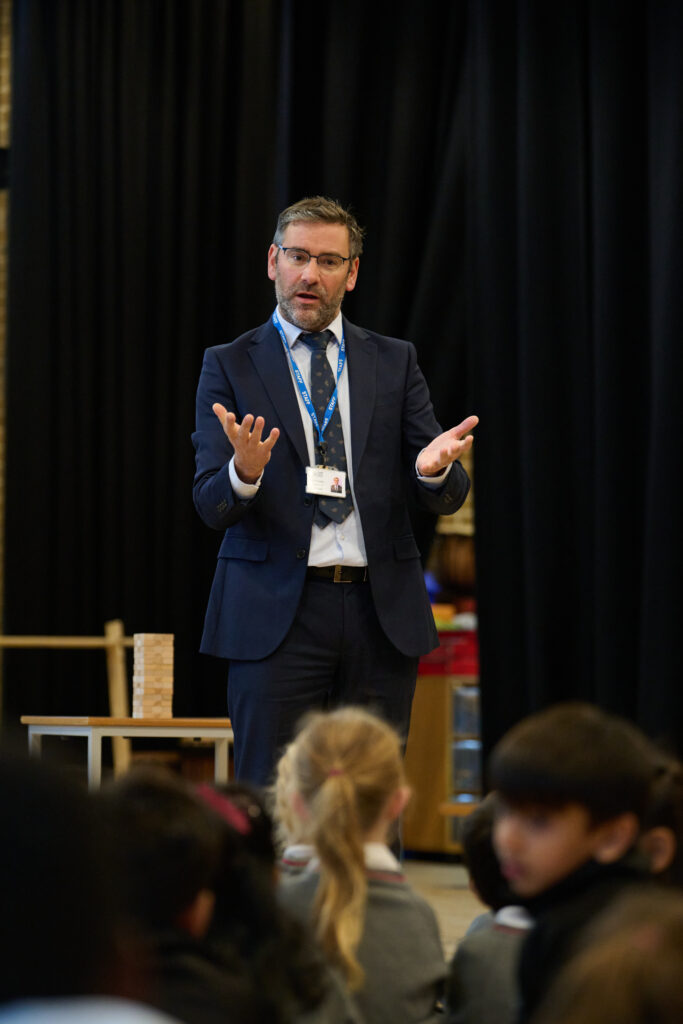
After a break, it was fantastic to return to our balloon debate this week, discovering Emeline Pankhurst, the suffragette’s movement and the legacy she created for the UK. This is a core British Values component to the curriculum and an important topic for young boys to build into their conscience and way of thinking. For our amazing girls, I set them the challenge to ask questions of their world, to have their eyes open to the male world that sometimes is around us, even when we aren’t looking – for example, we believe that all the headmasters were male at The Mall School (something the pictures outside my office frequently remind me of).
We also discussed words such as mankind, romantic, commandeer and woman – words which all contain the word ‘man’ in them. I posed the question – should we have an equivalent word for ‘boisterous’ – why can’t girls be ‘girlstrous’?
Later, we demonstrated how prior to the Representation of the People Act in 1918, women couldn’t vote, have financial independence or even custody rights over their children. Through some amusing examples using our school captains and the girls in the school, we demonstrated how the male world is still dominant in many parts of British society from sports to the military, tech world and industry amongst many examples. We also discussed the gender pay gap in sport and the wider world.
I would like to hope that Emeline Pankhurst has a key role in our balloon this year, similar to that of Rosa Parks last year. I encourage you to talk to your children, regardless of age about inequality, how society has changed, and how there is more work to do.
Week 5 – Mary Seacole
Taught over two assemblies, we added our recent candidate on our growing imaginary balloon. The influential, and often overlooked, nurse from the Crimean War was discussed with the juniors and seniors, with some excellent bandage tying and emergency care skills from the children! Given the current climate, we are focusing on the impact Mary Seacole had on nursing and medicine during her time, over her support for conflict and wounded soldiers in Crimea.
We discussed how incredible it was that a black woman self-funded her journey from Jamaica to England at a time which wasn’t conclusive to either being black, nor female. With discussions on how medicine has changed, how humanitarianism in medical care has evolved, and how modern nursery care can be attributed back to the early 1800s. Some of the children we fascinated to learn of the ‘British Hotel’ which likely evolved into the concept of a hospital and how behind the scenes, Mary Seacole was influential in this crucial foundation which contributed many years later to the creation of the NHS.
Two pupils gave the final argument of why Mary Seacole should remain in the balloon, with confidence and conviction.
The debate is shaping well and I am keen to see how this year’s debate unfolds, with only 2-3 candidates remaining. We shall see!
Week 6 – Beatrix Potter
Known for her famous works included The Tales of Peter Rabbit, Beatrix Potter is a well known conservationist in the Lake District, using the money from her books to by 1000s of acres of land. She helped shape modern farming, protect the countryside through the National Trust and is responsible for the Lake District as it is today. Pupils in their pitch for Beatrix Potter wrote:
“In our balloon debate, Beatrix Potter deserves to stay because her impact reaches both culture and the environment. As the creator of The Tale of Peter Rabbit, she transformed children’s literature with stories that have delighted generations and encouraged a love of reading. Beyond writing, she used her success to protect the beautiful Lake District. By buying and carefully managing farms and land, she preserved thousands of acres from development. She later donated much of this land to the National Trust, ensuring it would be protected forever. Keeping Potter means keeping both a storyteller and a guardian of nature”
Week 7 – Leonardo da Vinci
Our final candidate for the balloon was Da Vinci, with a specific focus on his flying machines and the ‘Da Vinci Screw’ – a very early prototype of the helicopter. The children watched videos on how his invention was designed, whilst also looking at modern drones and how they are used positively – to deliver parcels or medicines in remote parts of Africa.
Mr Gosden flew one of his smaller drones in the theatre to take photos of the assembly room!
Pupil’s in their final pitch shared “Leonardo’s understanding of science, art, and engineering makes him uniquely important. At a time before engines or modern tools, he was already thinking about flight in ways no one else had imagined. By staying safe in the balloon, his legacy can allow us to continue developing ideas that could help people in the future.”